Research Overview Link to heading
The Cosmic Baryon Cycle Link to heading
Galaxies are shaped by the perpetual flow of gas—flowing into and out of galaxies. More than 80% of the universe’s baryons exist in vast, invisible halos of gas around galaxies, fueling their growth and sculpting their destinies. Understanding this cosmic interchange is the frontier of modern galaxy evolution studies. My research group investigates three interconnected questions that drive galaxy evolution:
1. How do galaxies like the Milky Way become what they are? Link to heading
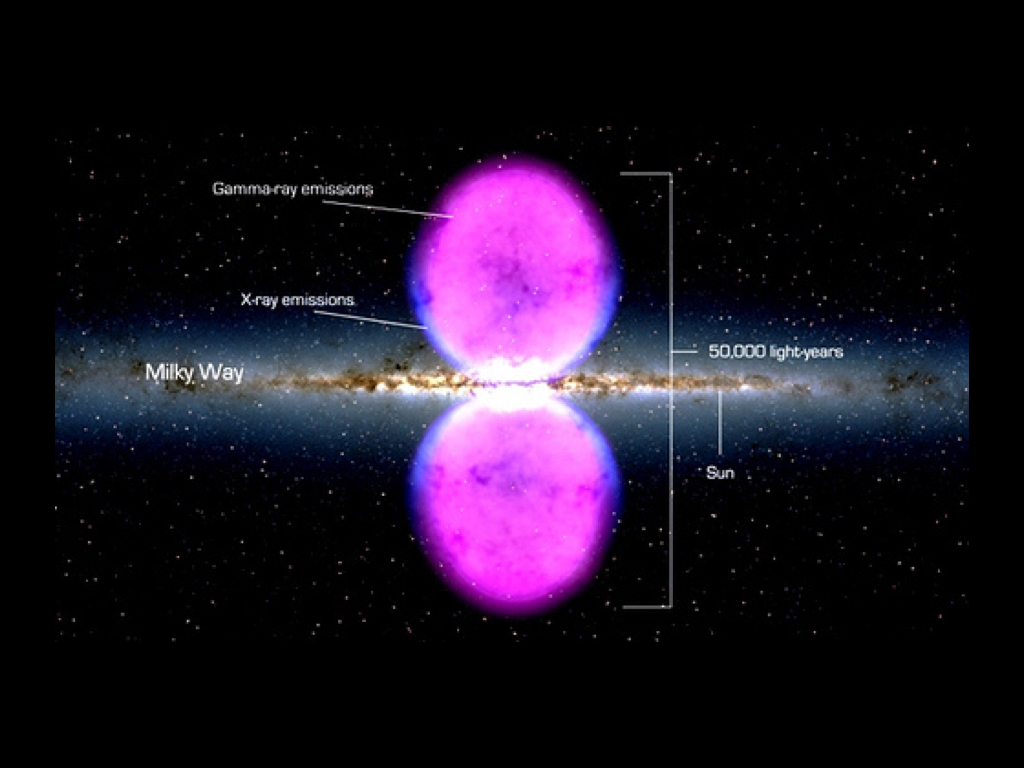
We study nearby and low-redshift galaxies to understand their assembly history. Our work on the Fermi Bubbles—giant outflows from our galactic center—reveals the dynamical processes that shape galactic halos. Combined with study of circumgalactic medium around low-z galaxies, we trace how past feedback events left their imprint on galactic structure and kinematics today.
2. How do galaxies quench star formation? Link to heading
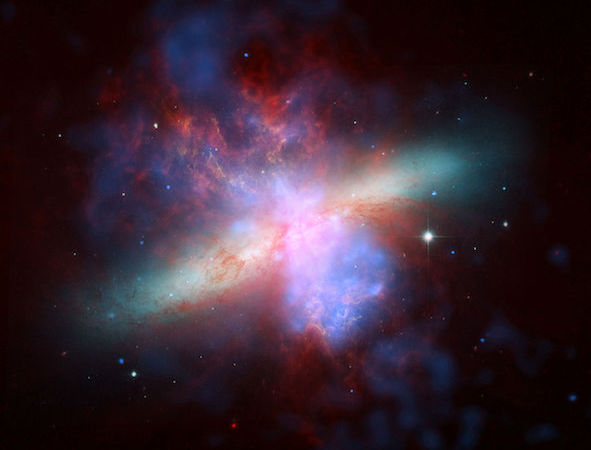
Massive outflows driven by star formation and active galactic nuclei regulate whether galaxies continue forming stars or fade into dormancy. Using gravitational lensing and high-resolution spectroscopy, we measure galactic outflows at multiple redshifts, revealing how these powerful winds transport metals and gas far from galaxies—determining their evolutionary fate.
3. How do galaxies acquire their mass? Link to heading
With the James Webb Space Telescope, we peer into the epoch of reionization to witness how the first galaxies ignited the universe. Our EIGER survey reveals how young galaxies efficiently acquire gas from the cosmic web and how they enrich the intergalactic medium—demonstrating that galaxy growth is fundamentally connected to large-scale structure.
Our Approach Link to heading
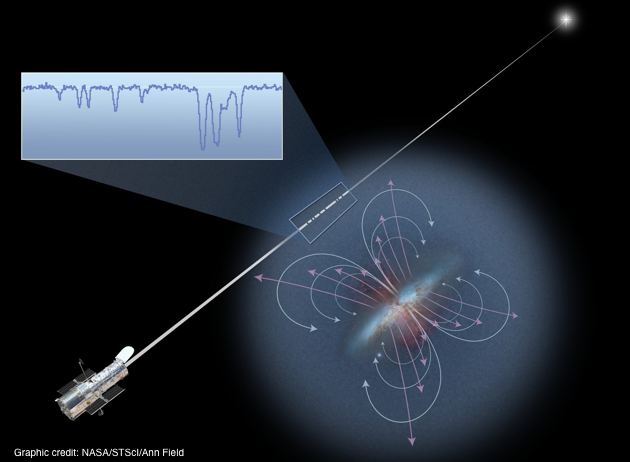
To unlock these secrets, we employ cutting-edge multi-wavelength observations across ultraviolet, optical, and radio wavelengths. We leverage gravitational lensing—nature’s cosmic magnifying glass—and wide-field Integral Field Spectroscopy to achieve unprecedented resolution of gas dynamics. Through absorption line spectroscopy in distant quasars and galaxies, we trace invisible reservoirs, revealing how gas flows regulate star formation, drive evolution, and sculpt the structure of the universe.
Explore our research software and tools →
This research is sponsored by the National Aeronautics and Space Administration (NASA) and the National Science Foundation (NSF).
Below is a summary of our major research programs. Click on any area to learn more.